In his successful 1980
presidential campaign, Ronald Reagan wooed voters by conjuring an image from
one of the most famous sermons in American history - John Winthrop’s A
Modell of Christian Charity. America, Reagan declared, remained “a shining
city on a hill."
But Winthrop’s sermon,
preached in 1629 to Puritan exiles aboard the English ship Arbella,
was not all brightness and light.
Winthrop encouraged the pilgrims that they had been called into a
special “covenant” by God, but he also cautioned: "If we should so frustrate and deceive
the Lords Expectations ... then All were lost indeed; Ruine upon Ruine,
Destruction upon Destruction would come, until one stone were not left upon
another."
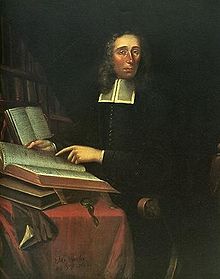 By the 1660s, many New
Englanders, hardened by their experience in what was for them a New World, were
haunted by this darker side of their conditional covenant. In a famous 1953 article in the William & Mary Quarterly, Harvard historian Perry Miller resurfaced fire-and-brimstone sermons like Increase Mather’s 1667 A Discourse Concerning
the Danger of Apostasy, in which Puritan preachers routinely decried and bemoaned a lack
of faithfulness in their younger, American-born generations.
By the 1660s, many New
Englanders, hardened by their experience in what was for them a New World, were
haunted by this darker side of their conditional covenant. In a famous 1953 article in the William & Mary Quarterly, Harvard historian Perry Miller resurfaced fire-and-brimstone sermons like Increase Mather’s 1667 A Discourse Concerning
the Danger of Apostasy, in which Puritan preachers routinely decried and bemoaned a lack
of faithfulness in their younger, American-born generations.
There is no indication
that Donald Trump is familiar with this religious history – nor with much
history or religion at all, for that matter.
But with his blunt promise to "Make American Great Again," Trump
has struck a nerve that runs through the very spine of the American body
politic. The essence of this age-old message is simple: we are not the
just and upright people we have long declared ourselves to be.
News headlines and
viral tweets seem to confirm this grim conclusion at every turn. Our political
parties are corrupt, our rich have forsaken their responsibilities, our communities
are being torn apart by suspicion and mistrust.
Our light, which we like to congratulate ourselves for having shone so
brightly for so long in the world, now seems to flicker, as if under threat of
being extinguished altogether. Declaring
himself a “law and order” President, Trump conjures covenant language, even
if unwittingly, and promises to restore the true faith without feeling
obligated to say what exactly that might be.
It might seem
improbable to consider as essentially spiritual the appeal of an irreligious
man like Donald Trump. But Trump the showman, like Reagan the actor before him,
has mastered a craft requiring that he understand his audience. And the vast
majority of Americans – no matter where they sit on the ideological spectrum –
still imbue their presidential politics with peculiarly spiritual
dimension.
Today historians tell
us there is no evidence that New Englanders in the late 17th century were any
more or less pious than their forebears who first settled the English colonies
in North America. These colonies were
not in decline – in fact their best days lay ahead of them. Neither did God mete out punishment and
reward in ways correlating to the moral and spiritual comportment of the
English settlers, who proved not only diligent colonists, but also merciless
conquerors and ruthless traders and drivers of slaves.
In his 1953 article, Perry Miller argued that the “jeremiads” of second and third generation Puritan divines in New England were not actual chronicles of
historical trends. Rather, they represented “a kind of ritual incantation”
offering “purgations of the soul.” Paradoxically, Miller concluded, they also
offered cheap grace: “The exhortation to a reformation which never materializes
serves as a token payment on the obligation, and so liberates the debtors.”
Donald Trump stands
squarely in this long American tradition, shamelessly condemning all around him
and declaring America to be a sordid mess. We will soon find out
whether American voters in the 21st century will embrace as their high
priest a salesman-shaman who, while pretending to brandish the keys to a
corrupt kingdom, immodestly proclaims “only I can fix it.”
Nice Fanoi. . many haven't picked their jaws up off the floor. Progressives have long suspected that MINOR ELEMENTS of this complicated electorate, how should I say it, SUCK . .but it now appears your observation applies to about full HALF of Americans. Yikes. As you say, "Trump has struck a nerve that runs through the very spine of the American body politic. The essence of this age-old message is simple: we are not the just and upright people we have long declared ourselves to be." With the stranglehold of Fox News and the armada of right wing radio fanatics, I'm not seeing an easy fix here! You?
ReplyDeleteNo easy fix. The point of this post (a little dense, and I am impressed that you picked your way through it) is, in part, that things are rarely as bad as doom-and-gloom preachers/politicians would make them out out to be ... and that people who think there is some golden age awaiting "if only" this or that or the other thing are also almost always wrong. I have been thinking a lot about our days in the 1980s, when Ronald Reagan was President. Somehow we muddled through ...
ReplyDelete